Your Guide

Mose Hayward
Multitasking Polyglot
Looking to improve your Italian in the hours a week you spend walking, driving, or in public transport? Want to add Italian vocabulary while working your muscles in the gym?
Learning Italian requires a significant time commitment. But we can squeeze in quite a bit of quality language learning while doing other things.
I’ll present specific plans to help you best harness your time doing dishes or on the ride to work so that you can make real progress with your communication and comprehension with Italian. And I’ve found that doing just a bit here and there every day adds up to some serious improvements in Italian fluency.
The Keys to Learning Italian While Doing Other Stuff
You can make significant strides toward fluency in Italian by listening to materials while taking care of other things. Here’s what you should keep in mind, however:
- Use quality audio-focused learning methods: The better options (reviewed in the next session) will help you make swift progress. The worse options will at least give you some exposure to Italian.
- Be active: You’ll be much, much better at learning and retaining Italian if don’t just listen. You need to be actually moving your mouth and responding to prompts or repeating the language out loud. “Passive learning” is never as successful. So don’t just leave Italian stuff on “in the background”. You’re less likely to remember or, more importantly, be able to use it.
- Be safe: Don’t look at screens while driving/cycling/running or otherwise navigating through the world. Please, for the good of all of us, listen to audio responsibly.
- Integrate this work with a larger Italian language learning plan: The learning you do while in transport or in the gym should be part of a program in which you can also actually try out what you are learning each week in lessons or elsewhere (see below for how to compliment this learning). Audio-only programs don’t work by themselves; you need to also see materials and then, especially, get out there and interact!
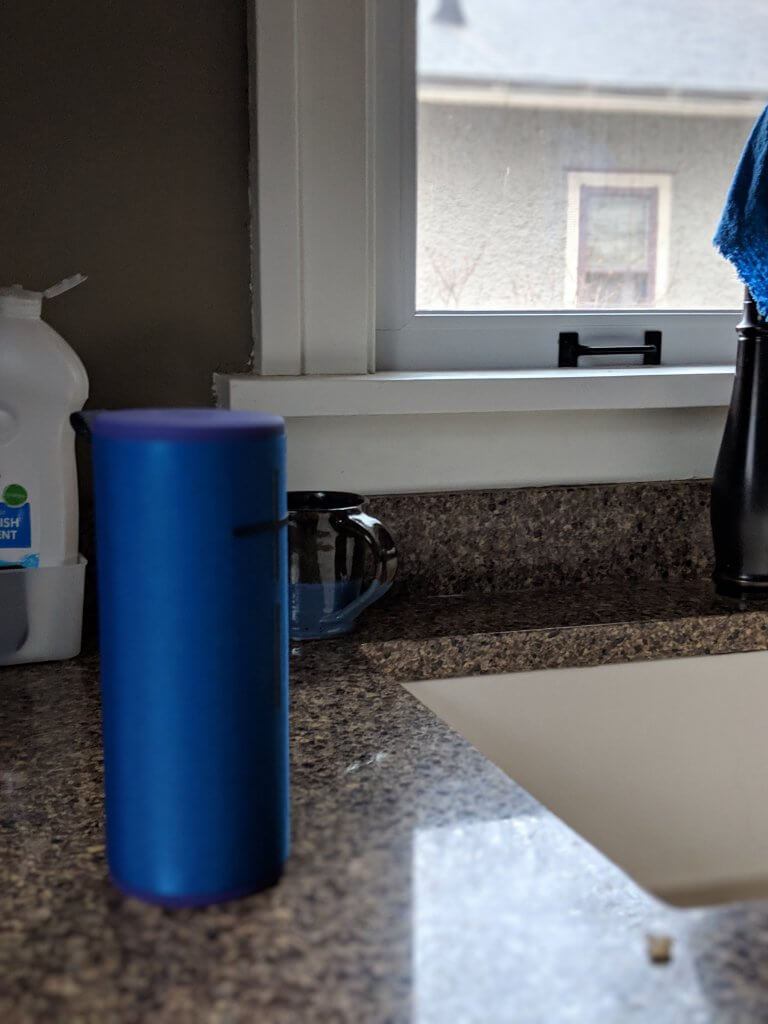
- Have enough volume: Hearing new sounds and getting the correct pronunciation of things like Italian vowels or double consonants is hard enough on its own. Give yourself a hand by not relying only on your phone or tablet’s speakers to hear these well. If you’re in a space where you can make noise, you’ll want to connect to a speaker with loudness and clarity (our best-reviewed portable speaker is the Boom 4). Otherwise, use a set of quality noise-cancelling earbuds (I love the Anker Soundcore Space A40)—or, also great for Italian learning and to protect your hearing, get some earplug earbuds (the best option I’ve found is the Elgin Rumble).




Our Favorite Audio Methods for Italian Learning
Pimsleur: For Total Beginners in Italian, and Tourists, with Lots of Explanations

Overall value
Perfect for total Italian beginners who want a slow pace, as well as for those planning a trip to Italy and who just want a few basics in an audio-only course. Pimsleur can also be good for intermediate learners needing a review, or to discover and fix frequent mistakes or improve their pronunciation.
In many of its dialogues, Pimsleur’s method makes the fair assumption that you’re an English speaker who would like to be able to chat up people in Italy a bit and have some very basic conversations.
Pimsleur Italian is excellent at breaking apart phrases and even words and forcing you to really listen carefully to each syllable and get it right. Some Italian learners elide the difference between one consonant and two or never quite get the right vowel sounds. Pimsleur does everything that could possibly be done in an audio course to make sure this doesn’t happen to you. It breaks apart words starting at the end of them, so you are forced to carefully consider the –sce at the end of the word capisce, for example.
For this reason, Pimsleur can be a very worthwhile program not just for total beginners but also for those who have forgotten some Italian basics or gotten sloppy with their pronunciation.
I think it would be very difficult for someone to feel lost when taking a Pimsleur audio language course. I used Pimsleur when I was first starting with Portuguese and I’ve checked out the Italian program, which seems quite similar. I find Pimsleur to be very methodical and careful; the downside for some of us is that this can just seem too slow and get a bit boring. Others’ reviews around the internet and in forums reveal this experience is common with Pimsleur; it’s great for those who want to go more slowly and carefully but for the rest it can be a bit demotivating.
If you’re just looking to get a few words of Italian before a trip and only have the bandwidth for an audio course while in transportation or at the gym, Pimsleur is perfect. But if you want to go further, be sure to supplement Pimsleur with other types of methods such as online classes (discussed below).
If you have enough Italian to follow along, podcasts are an excellent way to stay motivated with your Italian and gain vocabulary in key areas.
There are Italian podcasts in all genres and styles. Two of my favorites to get you started: Cose molto umane offers five-minute bursts of science-y takes on daily life and its quirks and Stories with Cecilia Sala is an Italian news podcast, like The Daily but shorter, with an in-depth focus on one important news topic each morning. Both Cose molto umane and Stories are relatively approachable for advanced Italian learners. For more options, see my current full list of favorite Italian podcasts here. And to discover your own favorite Italian podcasts based on your interests, check out Apple’s organization of Italian podcasts by subject. You’ll surely find something up your alley to listen to while on the bus or making pasta….
Just don’t make the mistake of having podcasts on “in the background”, without really listening. If your level of Italian or tasks at hand don’t allow you to follow along and your mind is wandering, you will frankly get very little out of this experience.
One important way to make podcasts easier is to choose slower talkers, conversational interviews, and less polished podcasts where people tend to repeat themselves. Italian humor podcasts can be particularly difficult for learners. Also consider using your podcast player’s speed adjustment to slow the playback rate down; almost all podcast apps now have this feature.
For me, I’ve found that pop science and cooking podcasts in Italian can be motivating, but podcasts focused on internal Italian politics can be too difficult to follow to be worthwhile, as I don’t know all of the parties involved.
Also keep in mind that, even when you understand Italian-language podcasts well, listening to them is an inherently passive activity and thus less likely to help you harness grammar and vocabulary in your own speech, when compared to the other audio materials I describe here that are designed specifically for learners. You can offset this somewhat by giving yourself assignments: write responses to what you hear in the podcasts (and post them to groups of other listeners on social media if you want), note and look up key vocabulary words and structures, and practice what you hear with Italian tutors (there’s more on finding and using tutors at the end of this article).
The key advantage to podcasts: They’re (generally) free!
Language Transfer: Like Listening in on a (Not Very Good) Italian Class
Overall value
This audio course is, in my estimation, far from the best use of your time. Almost any other Italian method will help you acquire more useful vocabulary and put it together with grammar for your use in real-life situations in Italy. And the experience of listening to another student plod along is frustrating. That said, Language Transfer is free (donation-based) and so something that you could certainly try listening to on the way to work and see how it goes. Because of the non-traditional concept, it may provide a different window for those who struggle with more normal communicative Italian language learning methods.
With the Language Transfer Italian audio files, you are essentially listening in on classroom lessons wherein the teacher speaks in English throughout, comparing words and structures of Italian to other languages.
As someone who has spent time learning multiple languages (as well as learning about language learning processes) and then using those languages in travel and life, I wanted to scream and turn off Language Transfer’s clumsy Italian course, but I listened to as much as I could stand for the purposes of doing this review. It was like being stuck in a bad language class. Teachers who speak mainly in English rather than the target language (Italian) tend to be robbing their students of great ways to hear and use the language in a real context. And comparing Italian to English is something students already do and don’t need teachers to point out—how are we not going to notice that some Italian words like generalmente and realmente have English equivalents? What we need Italian courses for is not to see that pattern but rather to see how to use these words—and how not to! Often, the Italian equivalents aren’t quite used in the same way.
Rather than focusing on practical situations and how to communicate in them, Language Transfer focuses on comparing Italian to English (and occasionally other languages). This might on a surface level seem interesting as amateur linguistics, but it’s not going to help you remember or use the language better. There is also the chance that the failure to offer Italian words and sentences in conversational contexts will lead to learner confusion and inadvertently reinforcing Italian usage that isn’t correct. And certainly, hearing a student slightly mispronouncing Italian words isn’t the best.
Anki: Commit What You’ve Learned to Long-Term Memory
Serious language learners, medical students, and others with memorization tasks often turn to Anki (be sure to find the right version of the app linked to here, and not get tricked into knock-offs in some app stores). The online and Android versions are free; the Apple app is paid and worth it.
Anki is not something you can do while driving or otherwise using your eyes and hands. But if you’re sitting in a train, waiting at a bus stop, or otherwise have a free moment in your day, this is a great way to take the Italian that you’ve already heard in Pimsleur or other methods and ensure that it sticks in your long-term memory. Take the time to make your own flash cards and you’ll ensure you never forget a new piece of Italian vocabulary again. (You can also download pre-made Italian study decks, but I don’t recommend this as they are not a good way to learn; they will not be personal to you and what you need to memorize. Anki is a memorization tool and not a good learning tool.)
Anki is just like physical flashcards except that you can add audio files to the cards and you have them with you, always, wherever your phone goes.
How to Compliment Your Italian Learned While Doing Other Things

In addition to the audio and flashcard methods mentioned above, you need to actually be productive (that is, producing speaking and maybe writing) in Italian in order for it to stick with you and be useful. Here’s what I suggest:
- Meet with a tutor: At a minimum, do this at least once a week. You presumably want to be able to speak Italian with actual people so it’s very important to practice doing so and get their feedback. Tutors from Italki are convenient for one-on-one affordable online lessons; while I was learning Italian I would work with two or three different tutors from Italki each week in order to get different perspectives and Italian regional accents. Tell your tutors what you’ve learned that week while commuting, exercising, etc., and ask them to help you practice it in conversational situations that are relevant to what you yourself might experience when speaking Italian. For a free option, you can also do language exchanges where you learn Italian and help an Italian learn your language, though I found it can be difficult to get a reliable commitment from Italians for doing this.
- Look up any grammar rules as needed. I suggest having a good grammar book (I recommend any older version of Soluzioni (it’s a wonderful book, but the latest version of this university textbook is overpriced and the updates are unnecessary). Looking up grammar rules and in some cases memorizing them may not be your favorite activity, but it can save you a lot of time and frustration when you’re not picking up organically on why things are said a certain way. Treat this as a reference and a time-saver, not a bible.
- If you’re at a beginner or intermediate level, also get a good self-teaching guide like Complete Italian and work your way through at least the first half of the book to get some basics down.
FAQ on Learning Italian While ….